You Won’t Believe What Lies Beneath Beirut’s Streets
Beirut is more than a city—it’s a living layer cake of history, culture, and jaw-dropping terrain. From hidden underground ruins to cliffside pathways carved by time, the landscape tells stories no guidebook can capture. I wandered beyond the markets and cafes, chasing the pulse of the city’s secret geography. What I found wasn’t just scenic—it was surreal. If you think you know Beirut, think again. The real magic? It’s literally beneath your feet.
The City That Defies Flat Maps
Beirut refuses to be flattened into a two-dimensional postcard. Unlike cities that sprawl outward across plains, Beirut climbs—dramatically, defiantly—rising from the shimmering edge of the Mediterranean into the rugged embrace of the Mount Lebanon foothills. This verticality is not an afterthought; it is the city’s foundational rhythm. As the land ascends, so do its neighborhoods, stacked like shelves carved into the hillside, each offering a slightly different breath of air, a new angle on the sea, a distinct microclimate shaped by elevation and exposure. The transition from the coastal corniche to the higher districts of Ras Beirut or Achrafieh feels less like a drive and more like a journey through layers of lived experience.
The city’s steep slopes have long dictated how people build, move, and live. Traditional homes were constructed with thick stone walls and overhanging wooden balconies, designed to stay cool in summer and retain warmth in winter—a direct response to the shifting temperatures that come with altitude changes within just a few city blocks. Architects have always had to work with the land, not against it, resulting in buildings that step down hillsides, follow contours, and sometimes appear to balance precariously on narrow ledges. This topography also influences airflow; sea breezes funnel upward through natural valleys, offering passive cooling that residents have relied on for generations, long before modern air conditioning became widespread.
For visitors, navigating Beirut on foot reveals the city’s secrets gradually. Unlike grid-based cities where predictability reigns, Beirut rewards curiosity. A narrow street may spiral upward without warning, opening suddenly onto a quiet plaza with a panoramic view of the harbor. Another alley might descend sharply, leading to a tucked-away café nestled between boulders. This sense of discovery is not accidental—it is built into the terrain. Every turn offers a new vantage point, a different skyline, a shift in atmosphere. To understand Beirut is to accept that movement here is not linear but layered, and that true exploration means embracing elevation as a companion, not a challenge.
Where Sea Meets Stone: Coastal Cliffs and Human Adaptation
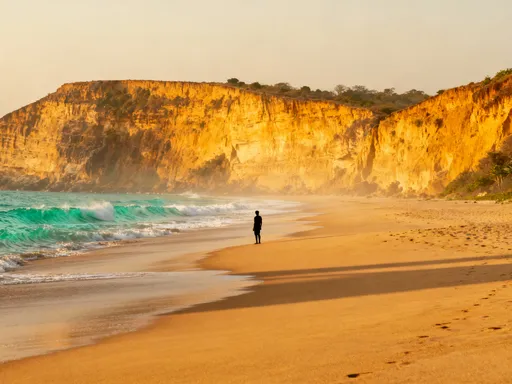
Nowhere is Beirut’s dramatic meeting of land and sea more evident than at Raouche, home to the iconic Pigeon Rocks—two towering limestone formations rising defiantly from the waves. Shaped over millennia by wind, water, and tectonic shifts, these natural sentinels are more than a tourist attraction; they are a testament to the raw geologic forces that continue to shape the coastline. But beyond the postcard-perfect view lies a deeper story: how people have learned to live alongside such powerful natural features, adapting not just to the beauty but to the constraints and opportunities of living on a cliff-lined shore.
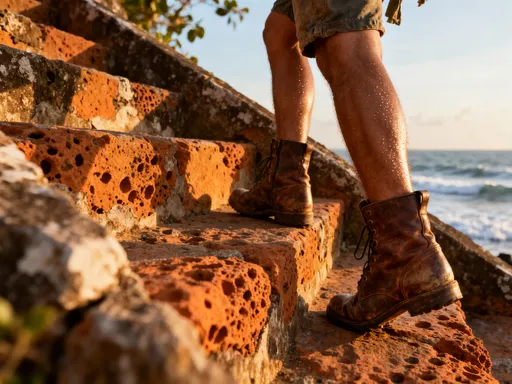
Along the cliffs, a network of hand-cut staircases connects the lower promenade to upper residential areas. These aren’t grand tourist installations but practical, often unmarked pathways worn smooth by daily use. Fishermen still descend these steps to launch small boats from hidden coves, their movements unchanged for generations. Joggers and families climb them at sunset, drawn by the cooling sea air and the unobstructed view of the sun dipping below the horizon. In this way, the cliffs are not barriers but connectors—linking sea level to skyward homes, tradition to modern life, solitude to community.
The architecture along the coastal bluffs reflects this harmony between human need and natural form. Buildings are anchored into the rock, their foundations reinforced to withstand erosion and seismic shifts. Balconies extend over the edge, offering residents front-row seats to the Mediterranean’s endless motion. Some homes are built into the hillside itself, partially buried for insulation and stability, their rooftops doubling as terraces. This vertical integration of living space with geology is rare among coastal cities and speaks to a deep-rooted understanding of place. It is not merely about views—it is about resilience, about learning how to live safely and beautifully on land that refuses to be tamed.
Local customs, too, are shaped by the terrain. The tradition of evening strolls along the Raouche promenade—known as “fekhr”—is more than social ritual; it is a way of reclaiming the coastline, of affirming presence in a space defined by nature’s grandeur. Children play near the base of the rocks, elders sip tea at sidewalk tables, and couples pause to take photographs, all under the watchful presence of the ancient formations. In this rhythm of daily life, the boundary between nature and urban life blurs, creating a unique coastal culture where the sea isn’t just a backdrop—it’s a constant, living presence.
Beneath the Surface: Exploring Beirut’s Subterranean Layers
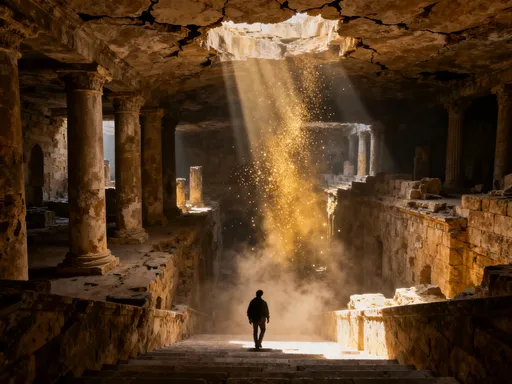
Below the reconstructed sidewalks of downtown Beirut lies a hidden world—one built not by modern engineers but by civilizations long past. As the city has risen, fallen, and rebuilt itself over centuries, it has done so atop layers of history buried beneath its streets. In the heart of the city, archaeological sites reveal Roman colonnades, Ottoman-era foundations, and even traces of Phoenician settlements. These are not distant museum pieces but living remnants embedded in the urban fabric. In places like the Roman Baths site near Nejmeh Square, glass panels set into the pavement allow passersby to peer directly into the ruins below, creating a powerful visual metaphor: history is not behind you—it is under your feet.
Beirut’s geology has played a crucial role in preserving these layers. The city sits on a mix of limestone, clay, and alluvial deposits—materials that, when undisturbed, can seal and protect ancient structures from complete destruction. Even after wars, fires, and earthquakes, remnants of earlier cities have survived beneath the surface, waiting to be rediscovered. Archaeologists working in Beirut often describe excavation as a process of peeling back time, with each meter down revealing a new era. A sewer repair can turn into a major dig; a new building foundation may uncover a centuries-old cistern or mosaic floor.
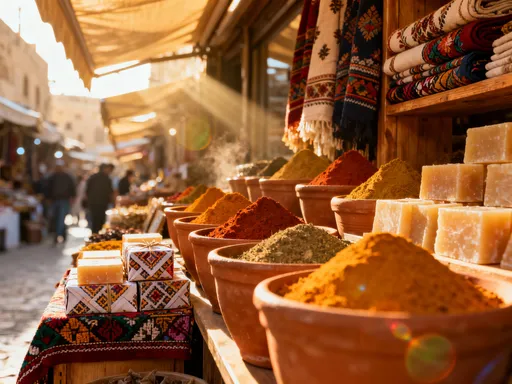
What makes these subterranean discoveries so powerful is their accessibility. Unlike cities where ancient ruins are cordoned off or relocated, Beirut integrates them into daily life. The Roman Cardo, once a bustling marketplace, now runs beneath modern shops and cafes, its original stone columns preserved in situ. Visitors can walk along a reconstructed section, imagining the clatter of sandals and the scent of spices in the air two thousand years ago. Similarly, the remnants of the Ottoman-era souks are not recreated facsimiles but authentic structures that have been carefully restored and repurposed, their arches and courtyards still defining the flow of the city.
These underground layers do more than satisfy historical curiosity—they offer a sense of continuity. In a city that has endured so much upheaval, the presence of ancient roads and foundations serves as a quiet reminder that Beirut has always risen again. The terrain itself becomes a vessel of memory, holding stories in its strata. For locals, walking over these ruins is a subtle act of connection—to ancestors, to resilience, to identity. For travelers, it transforms a simple stroll into a journey through time, where every step carries the weight of centuries.
Hidden Pathways: Staircases, Alleys, and Urban Threads
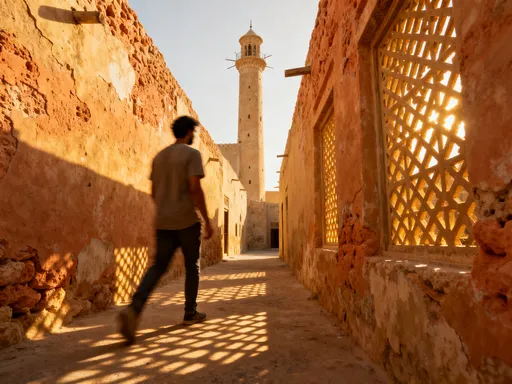
Beirut’s official streets may be congested and chaotic, but its true soul lives in the informal network of staircases, alleyways, and footpaths that stitch the city together. These are not tourist attractions but essential infrastructure—used daily by residents to navigate the city’s steep terrain. In neighborhoods like Gemmayzeh, Mar Mikhael, and Moussaitbeh, a complex web of narrow staircases winds through gardens, behind buildings, and up rocky inclines, connecting distant points in ways that cars never could. These routes are rarely marked on maps, yet they are deeply known to locals, passed down through generations as part of the city’s unwritten geography.
These stairways are more than functional; they are social spaces. Neighbors greet each other on landings, children play on wide steps, and shopkeepers set out chairs for evening conversations. A simple staircase may lead to a hidden courtyard where bougainvillea spills over whitewashed walls, or open onto a rooftop with an unobstructed view of the sea. Some paths pass by century-old churches tucked between modern apartments, their bells still marking the hours. Others reveal street art—murals that tell stories of resistance, memory, and hope—painted directly onto the stone walls that line the route.
Walking these hidden threads offers a completely different experience from driving through Beirut. The pace slows. The noise of traffic fades. The air cools under the shade of fig trees. One moment you’re in a bustling street market, the next you’re ascending a quiet stone staircase that feels centuries old, with iron railings worn smooth by countless hands. These transitions are jarring in the best way—they force you to pay attention, to notice details, to feel the city rather than just see it.
For urban planners, these informal pathways represent a kind of organic intelligence—a network that evolved not from blueprints but from daily necessity. They reflect how people actually move, where they gather, what views they value. In recent years, efforts have been made to preserve and even enhance these routes, recognizing their cultural and practical importance. Lighting has been added to improve safety, plants have been introduced to soften the stone, and small rest areas have been created. These improvements honor the pathways’ history while ensuring they remain useful for future generations. To walk them is to participate in Beirut’s living geography—a city that moves not just horizontally, but vertically, socially, and emotionally.
Green Terraces: How Nature Climbs with the City
Amid Beirut’s dense urban fabric, green spaces do not spread—they climb. On the eastern slopes of the city, where the land rises sharply into the hills, pockets of vegetation cling to the terrain like tenacious survivors. These are not vast parks but intimate green terraces—small gardens, community plots, university grounds, and remnants of ancient forests—that serve both ecological and social functions. Horsh Beirut, one of the city’s last remaining pine forests, is a prime example. Nestled in a natural depression, it offers shade, clean air, and a refuge from the noise and heat of the city, its roots helping to stabilize the soil on a slope prone to erosion.
Urban gardens have long been part of Beirut’s landscape. Even in densely populated areas, families cultivate rooftop plots, growing herbs, vegetables, and fruit trees in containers and raised beds. In neighborhoods like Ras Beirut and Hamra, small public gardens are maintained by residents, their flowerbeds bright with seasonal blooms. These spaces do more than beautify—they cool the air, reduce runoff, and provide habitat for birds and insects. In a city where concrete dominates, every patch of green is a victory for environmental balance.
The American University of Beirut’s campus is another model of green integration. Its terraced gardens follow the natural slope of the land, using native plants that require minimal irrigation. Stone pathways wind through olive trees and fragrant herbs, creating a sense of harmony between built and natural environments. The university’s agricultural research center also promotes sustainable practices, teaching urban farming techniques that can be adapted to small spaces. These efforts reflect a growing awareness that Beirut’s future depends on working with its terrain, not against it.
Green terraces also serve as informal gathering places. Parents bring children to play in shaded corners, students study under trees, and friends meet for quiet conversations away from the bustle of the streets. In times of crisis, these spaces have taken on even greater importance, offering solace and a sense of normalcy. They remind residents that nature is not something to be escaped to—it is something that can thrive within the city, if given the chance. Beirut’s green spaces may be fragmented, but together they form a resilient network, proving that even in a city shaped by upheaval, life finds a way to grow upward.
Navigating the Ascent: Transportation in a Vertical City
Getting around Beirut is not just a matter of distance—it is a negotiation with elevation. A journey that looks short on a map can take twice as long when it involves climbing from sea level to a hilltop neighborhood. Taxis, the most common form of transport, must lurch uphill through narrow, winding streets, their engines straining against gravity. Buses follow predetermined routes, but many cannot access the steeper alleys, leaving higher homes reliant on foot traffic or private vehicles. For pedestrians, route planning becomes a strategic exercise—choosing between a longer, flatter path or a steep shortcut that demands stamina.
The city’s verticality is reflected in its architecture. Some buildings have multiple entrances on different levels, each serving a different street. A resident on the fifth floor might enter from the top of a hill, while someone on the first floor accesses the same building from the bottom. Elevators are common, but not universal, and in older buildings, stairwells are wide and well-lit, acknowledging the reality that many people will walk. This multi-level design is not just practical—it reinforces the idea that Beirut is experienced in sections, each floor offering a different relationship to the surrounding landscape.
Public transportation remains limited in its ability to serve the city’s elevation changes. While shared taxis and ride-hailing apps help fill the gap, they are not always affordable or reliable. As a result, walking remains one of the most effective ways to navigate, especially in central districts. Locals develop an intuitive sense of the terrain, knowing which streets are too steep after rain, which staircases offer shade, and which routes provide the quickest access to markets or schools. This embodied knowledge is passed down informally, part of the city’s living memory.
For visitors, understanding Beirut’s verticality can transform the travel experience. Choosing accommodations at a moderate elevation can balance views with accessibility. Planning routes that follow natural contours—rather than fighting the slope—can conserve energy and reduce frustration. And embracing walking as the primary mode of transport opens up access to hidden pathways, local shops, and unexpected vistas. In a city where every meter of elevation changes the view, the journey itself becomes the destination.
Why Terrain Shapes True Travel Experiences
Most visitors to Beirut focus on the flat, accessible zones—the corniche, the souks, the main squares—missing the deeper character that emerges only when you engage with the city’s terrain. But those who venture into its hills, descend into its archaeological layers, and climb its hidden staircases gain a richer, more intimate understanding. Beirut’s landscape is not a passive backdrop; it is an active participant in daily life, shaping how people build, move, gather, and remember. Its cliffs, slopes, and underground ruins are not obstacles to be overcome but invitations to explore, to slow down, to look closer.
The city’s verticality fosters a sense of discovery that few urban environments can match. A simple walk can evolve into an adventure, revealing quiet courtyards, unexpected views, and moments of connection with residents. The terrain demands attention—forcing travelers to be present, to feel the burn in their legs, to notice the shift in temperature as they ascend. In doing so, it transforms sightseeing into sensing, observation into experience.
Moreover, Beirut’s geography embodies resilience. The land has endured earthquakes, wars, and rapid development, yet it continues to support life, beauty, and community. In the way homes cling to cliffs, how gardens grow on slopes, and how ancient ruins remain visible beneath modern streets, there is a quiet message: persistence is possible. To move through this city is to witness that truth firsthand.
Travelers who embrace Beirut’s terrain don’t just see the city—they feel it, layer by layer. They understand that its charm lies not in perfection but in its contradictions: the coexistence of ancient and modern, the balance of sea and stone, the way life flourishes even on unstable ground. To experience Beirut fully is to accept its unevenness, to climb its stairs, to descend into its depths, and to discover that the most memorable journeys are not always the easiest ones.
Conclusion
Beirut’s terrain is its silent storyteller. From the sea-carved Pigeon Rocks to the Roman roads buried beneath downtown, from the winding staircases of Gemmayzeh to the green terraces clinging to the hills, the land holds the city’s history, shapes its present, and influences its future. It is not a passive stage but an active force—determining how people live, how buildings rise, how communities connect. To visit Beirut and ignore its topography is to see only the surface. But to move with its rhythms—to climb, descend, explore, and pause—is to understand its soul. Beirut does not lie flat. It rises, layer by layer, against all odds. And for those willing to walk its slopes and peer beneath its streets, the city offers not just sights, but revelations.