You Won’t Believe This Hidden Architecture at Iguazu Falls
Standing at the edge of Iguazu Falls in Brazil, I didn’t expect breathtaking views *and* stunning architecture. But there it was—the perfect blend of nature and human design. Suspended walkways, jungle-framed viewpoints, and smartly built observation decks turned my visit into something unforgettable. It wasn’t just about the roar of water; it was how every structure enhanced the wild beauty without stealing the spotlight. This is more than a nature trip—it’s a masterclass in harmony. The way steel and wood weave through the rainforest, the way railings curve just enough to keep you safe but not block a single leaf from view, speaks of deep intention. Here, architecture doesn’t dominate—it listens. And in that quiet respect, it amplifies the grandeur of one of Earth’s most powerful natural wonders.
First Encounter: The Moment Iguazu Took My Breath Away
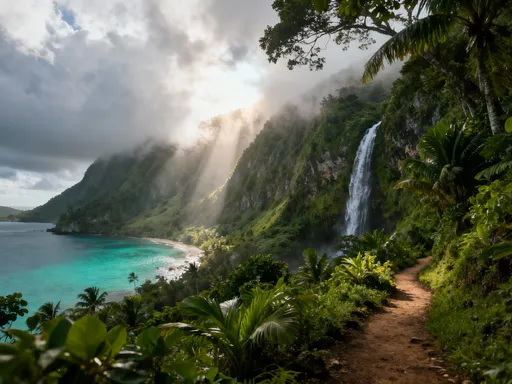
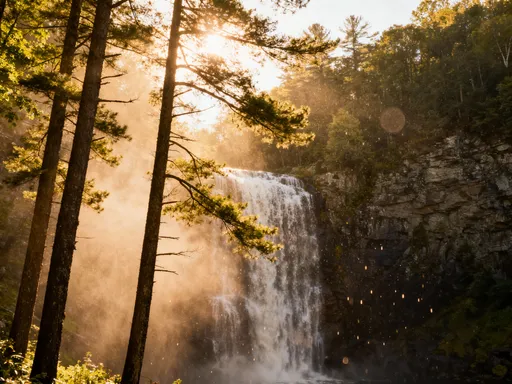
The first sound was what struck me—deep, constant, and all-encompassing. Long before I saw the water, I felt it in my chest. Arriving from the Brazilian side of Iguazu Falls, I stepped out of the park’s main entrance and into a world transformed. The air was thick with mist, cool against the skin even under the morning sun. Towering trees draped in vines lined the path, their canopies alive with the calls of toucans and howler monkeys. Then, around a bend, the jungle opened up—and there it was: a sweeping curtain of water plunging over a cliff more than two kilometers wide. The sight was overwhelming, not just in scale but in presence. It wasn’t like seeing Niagara or Victoria Falls through a lens of concrete barriers and crowds. Here, the experience felt intimate, immersive, as if I had been invited into the heart of the spectacle.
What made this first view so powerful was not only the raw force of the falls but also the way the viewing platform had been placed. Set back slightly, elevated just enough to give a panoramic vista, the structure blended into the landscape. Made of weather-resistant wood and light steel, it followed the natural curve of the cliff, guiding the eye rather than competing with it. There were no fences blocking the horizon, no loud signs or ticket booths in sight. Instead, a simple railing—low and transparent—allowed unobstructed sightlines. The design said, without words, “Look. This is what matters.” It was clear from the start that Iguazu was not just a destination for nature lovers, but for those who appreciate how thoughtful design can deepen our connection to the wild.
That moment of awe was not accidental. It was engineered with care. The Brazilian side of Iguazu offers one of the most dramatic single viewpoints of the falls, particularly of the San Martín Falls and the wider curtain known as La Garganta del Diablo’s outer edge. Unlike other major waterfalls where access is often limited to distant overlooks or crowded plazas, Iguazu’s planners prioritized immersion. Visitors are brought close—close enough to feel the spray, to hear the thunder, to see rainbows form and dissolve in the mist. And yet, despite the proximity, the environment remains undisturbed. That balance—between access and preservation—is where Iguazu’s true genius begins to reveal itself.
The Design Philosophy: Where Engineering Meets the Rainforest
At first glance, the walkways and platforms at Iguazu Falls appear almost effortless—simple paths winding through the jungle, gently rising and falling with the terrain. But behind this apparent simplicity lies a sophisticated design philosophy rooted in ecological sensitivity. The structures are not merely functional; they are part of a deliberate strategy to allow human presence without intrusion. Architects and engineers worked closely with environmental scientists to ensure that every beam, bolt, and board would leave the smallest possible footprint. The guiding principle was clear: do not alter the forest for the path—let the path follow the forest.
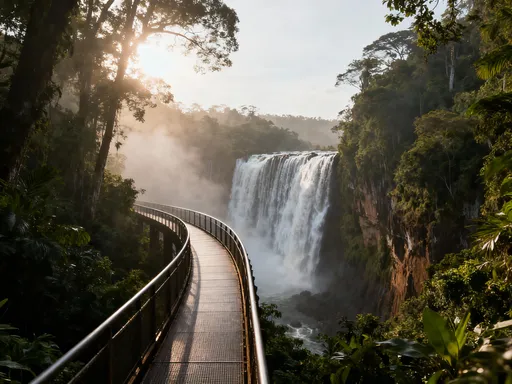
To achieve this, most walkways are elevated on steel stilts, raised above the forest floor to protect tree roots and allow animals to pass beneath. The supports are positioned to avoid damaging mature trees, and in many cases, the walkways curve around trunks or branch over natural clearings. This approach not only preserves the ecosystem but also enhances the visitor experience—walking above the ground, you feel like you’re moving through the canopy, surrounded by birds, bromeliads, and the dappled light of the rainforest. The materials used are chosen for durability and harmony: treated wood resists rot in the humid climate, while powder-coated steel withstands constant exposure to moisture and salt from the mist.
Equally important is what the designers chose not to build. There are no large visitor centers looming over the falls, no sprawling parking lots carved into the hillside. Services are clustered at the entrance, well away from the core natural area. Even the signage is understated—carved wood or engraved metal plaques mounted at eye level, providing information without visual clutter. Lighting, where needed, is low-intensity and directed downward to avoid disturbing nocturnal wildlife. This restraint reflects a broader ethic: tourism infrastructure should serve the environment, not the other way around. At Iguazu, the architecture doesn’t announce itself. It waits. And in that quiet, it earns respect.
Walking on Water: The Elevated Trails That Changed Everything
The most iconic experience at Iguazu Falls is walking the elevated trails that stretch toward the heart of the cascade. Among them, the *Trilha das Cataratas*—or Falls Trail—on the Brazilian side is a masterpiece of experiential design. Spanning nearly a kilometer, this wooden pathway begins at ground level and gradually ascends, following the curve of the river as it approaches the edge of the falls. With each step, the sound grows louder, the mist thicker, until finally, the path opens onto a series of platforms suspended over the churning rapids. From here, you stand directly above the falls, looking down as millions of liters of water vanish into the gorge below.
What makes this trail so effective is its pacing. The journey is designed to build anticipation. At first, the falls are glimpsed through the trees—flashes of white between leaves. Then, the path narrows slightly, funneling attention forward. Benches appear at intervals, inviting pauses, reflection. The railings are set at varying heights—lower on the outer edges for unobstructed views, slightly higher near drop-offs for safety—yet never so high as to create a sense of enclosure. This subtle variation ensures that visitors feel secure without feeling confined. The materials, too, contribute to the experience. The wooden planks are slightly textured to prevent slipping, even when wet, and the steel joints are engineered to expand and contract with temperature changes, preventing warping over time.
Perhaps the most dramatic section is the final stretch leading to the Devil’s Throat viewpoint. Here, the trail becomes a narrow steel bridge, jutting out over the void. The structure sways slightly with foot traffic, a reminder of the power beneath. But the engineering is flawless—tested for wind, water, and weight loads far beyond normal use. What could feel dangerous instead feels exhilarating, even sacred. You are not separated from nature; you are suspended within it. This is not adrenaline tourism. It is reverence made tangible through design. Every bolt, every beam, every handrail has been placed to guide, protect, and above all, to preserve the sense of wonder.
Viewpoints as Art: How Design Enhances the Natural Drama
A great viewpoint does more than show you a scene—it frames it, shapes your perception, and deepens your emotional response. At Iguazu, the observation decks are not mere platforms; they are carefully composed stages for nature’s performance. Take the main Brazilian overlook: positioned at the midpoint of the falls, it offers a sweeping panorama that captures nearly 80% of the entire cascade in a single view. The deck is slightly curved, mirroring the natural arc of the cliff, and its edges are set at an angle that directs the eye across the water rather than down. This subtle geometry prevents visual fatigue and encourages slow, deliberate looking.
Other viewpoints use elevation and perspective to create moments of surprise. One such spot, hidden along a secondary trail, drops slightly below the main path, placing visitors at the level of the river just before it spills over the edge. From here, you see the water not as a distant spectacle but as a living force—churning, swirling, accelerating toward the drop. The platform is small, accommodating only a few people at a time, which adds to the intimacy. There are no benches, no signs—just space to stand and absorb. The railing here is set back, allowing unimpeded photography and movement, while the surface is slightly sloped to shed rain and mist quickly.
Lighting and acoustics are also thoughtfully managed. Though the trails are closed at night, emergency and safety lighting is installed with care. LED fixtures are shielded and angled downward, minimizing light pollution and protecting nocturnal species like frogs and bats. Even the sound of footsteps has been considered—the wooden walkways absorb noise better than concrete, reducing the human footprint in auditory terms. Signage, when present, uses neutral tones and simple typography, blending into the surroundings. The overall effect is one of quiet clarity. You are never distracted from the falls. Instead, the architecture works silently to sharpen your focus, to help you see more deeply, to feel more fully.
Behind the Scenes: Infrastructure That Respects the Wild
While the walkways and viewpoints capture the most attention, the true success of Iguazu’s design lies in what you don’t see. Behind the scenes, a network of service roads, maintenance trails, and utility systems keeps the park running—yet remains almost entirely invisible to visitors. This invisibility is by design. Engineers and planners understood that even the most necessary infrastructure could disrupt the sense of wilderness if not carefully managed. So, access roads for staff and emergency vehicles follow old logging routes, repurposed and re-vegetated to minimize erosion. Waste collection is handled through underground chutes and sealed containers, transported out during off-hours to avoid noise and visual clutter.
Rest areas and restrooms are clustered at the trailheads and major junctions, constructed with the same principles as the walkways: low profile, natural materials, and careful siting. The restroom facilities, for example, are built partially underground, with green roofs covered in native plants. This not only reduces their visual impact but also improves insulation, lowering energy use. Water is recycled where possible, and solar panels provide supplementary power for lighting and ventilation. Even the trash bins are designed to blend in—made of recycled composite materials that mimic wood grain and resist graffiti.
Staff access is another area of quiet innovation. Park rangers and maintenance crews use a separate trail system that runs parallel to the visitor paths but remains hidden by vegetation. This allows for routine inspections, repairs, and wildlife monitoring without disrupting the visitor experience. Communication systems are wireless and discreet, with antennas concealed in tree-like poles. All of this ensures that the park functions efficiently while maintaining the illusion of untouched nature. It’s a delicate balance—keeping the machinery of tourism running while letting the wild remain wild. At Iguazu, it’s achieved not through grand gestures, but through thousands of small, thoughtful decisions.
Comparing Sides: Brazil vs. Argentina – A Design Perspective
One of the most fascinating aspects of Iguazu Falls is that it straddles two countries—Brazil and Argentina—each offering a different architectural interpretation of the same natural wonder. The Brazilian side emphasizes grandeur and perspective. With fewer trails but more open viewpoints, it invites visitors to step back and take in the full scale of the falls. The main platform, as mentioned, provides one of the most complete panoramic views in the world. The design here is bold but restrained—wide, sweeping lines that echo the curve of the river, with minimal structures to interrupt the sightlines. It’s a celebration of distance and scope, perfect for those who want to grasp the immensity of the falls at a glance.
The Argentine side, in contrast, favors immersion and movement. With over 20 kilometers of trails, including the famous *Garganta del Diablo* path, it offers a more dynamic experience. The walkways here are longer, narrower, and often plunge deeper into the jungle, bringing visitors closer to individual cascades and rapids. The architecture is more integrated into the forest, with bridges that cross small tributaries and platforms that jut out over churning pools. While the Brazilian side says, “Look at this,” the Argentine side says, “Walk through it.”
Both approaches are valid, and both prioritize conservation. The Argentine trails use the same elevated design principles, protecting the forest floor and wildlife corridors. But the experience they create is different—one of journey, of discovery, of surprise around every bend. Signage is more frequent, offering educational content about local flora and fauna, while rest areas are more numerous to support the longer hikes. In architectural terms, the Brazilian side is like a gallery, with carefully framed paintings; the Argentine side is like a film, unfolding moment by moment. For the thoughtful traveler, visiting both sides is not redundant—it’s essential. Together, they offer a complete picture of how design can shape our relationship with nature in complementary ways.
Why This Matters: Lessons in Sustainable Tourism
Iguazu Falls is more than a scenic destination. It is a model of what responsible tourism can look like when design, ecology, and human experience are thoughtfully aligned. In an era when overtourism threatens fragile ecosystems—from Machu Picchu to the Galápagos—places like Iguazu offer a blueprint for balance. The park proves that it is possible to welcome hundreds of thousands of visitors each year without degrading the environment. It shows that accessibility and preservation are not opposites, but partners. And it reminds us that beauty is not diminished by structure—when done right, structure enhances it.
The lessons from Iguazu extend far beyond South America. They speak to a global need for tourism that respects limits, honors context, and prioritizes long-term stewardship over short-term gain. When planning new parks or renovating existing ones, decision-makers can learn from Iguazu’s use of elevated walkways, discreet services, and sustainable materials. They can adopt its philosophy of minimal visual impact and maximum experiential depth. Even smaller destinations can apply its principles—using local resources, limiting capacity, and designing for quiet immersion rather than spectacle.
For travelers, especially women between 30 and 55 who often plan family trips and value meaningful experiences, Iguazu offers inspiration. It encourages us to seek out destinations where care is visible—not just in clean paths and friendly staff, but in the way the land is treated. It invites us to appreciate not only the falls, but the thought behind the trail that leads to them. In a world where so much of travel feels transactional, Iguazu feels sacred. It reminds us that we don’t have to conquer nature to connect with it. We just have to design our presence with humility.
As I left the park that day, the roar fading behind me, I carried more than photos and memories. I carried a quiet conviction: that the best places are not just discovered, but carefully shaped. That beauty can be protected even as it is shared. And that sometimes, the most powerful designs are the ones you hardly notice—because they let nature speak first, and loudest.