You Won’t Believe These Secret Viewpoints in Riyadh
Riyadh isn’t just skyscrapers and sand — it’s a city of hidden heights and silent lookouts most visitors never find. I stumbled on viewpoints that made me stop, breathe, and truly see the capital in a new light. From quiet hilltops to rooftop escapes, these spots reveal Riyadh’s soul beyond the rush. If you're looking for moments of calm and breathtaking scenery, trust me — the real magic is up high and off the map. These elevated vantage points offer more than panoramic photos; they provide a deeper understanding of how tradition and transformation coexist in this evolving metropolis. For travelers seeking authenticity, peace, and a fresh perspective, discovering these secret lookouts becomes not just a highlight, but a quiet revelation.
Reimagining Riyadh: Beyond the Desert City Stereotype
Riyadh is often reduced to a single narrative — a sprawling desert capital defined by heat, sand, and rapid construction. While the city’s growth is undeniable, this narrow view overlooks its layered identity. Satellite imagery from recent years shows a remarkable transformation: green corridors threading through arid terrain, elevated highways connecting distant districts, and clusters of high-rises rising like modern oases. What many fail to recognize is that this expansion has created unexpected vantage points — natural bluffs, restored valleys, and architectural rooftops — that offer intimate perspectives on the city’s evolution.
The truth is, Riyadh has always been shaped by elevation. Nestled within the Najd plateau, the city sits at an average altitude of 600 meters above sea level, giving it a naturally elevated character. This geographical feature, combined with deliberate urban planning, has led to the emergence of overlooks that blend the natural and the built environment. Areas once considered remote, such as the southern reaches near Wadi Hanifah, are now accessible gateways to quiet observation. The city’s commitment to environmental restoration has turned former dry riverbeds into green lungs, flanked by walking trails and unmarked viewpoints known only to locals who value stillness over spectacle.
What sets these hidden lookouts apart is their ability to tell a more complete story of Riyadh. They reveal not just how the city looks today, but how it remembers its past. Adobe structures still stand in harmony with glass towers, and ancient water systems function alongside modern infrastructure. These contrasts are best appreciated from above, where the eye can trace the lines of history and progress simultaneously. For the thoughtful traveler, this shift in perspective transforms Riyadh from a stopover into a destination worth exploring in depth.
Why Viewpoints Matter: The Emotional Power of Perspective
Standing at an elevated vantage point does more than offer a wide-angle view — it alters mood, focus, and emotional state. Environmental psychology suggests that open, expansive spaces reduce mental fatigue and promote a sense of calm. When the horizon stretches uninterrupted, the mind follows, releasing tension and inviting reflection. In a fast-paced city like Riyadh, where daily life can feel dominated by movement and noise, these moments of stillness become quietly transformative.
One anonymous visitor described watching sunrise from a hilltop south of the city: "I saw the light slowly climb over the edge of the Empty Quarter, turning the sand from gray to gold. The city was still asleep. In that silence, I felt completely present for the first time in months." Another traveler recalled seeing Riyadh’s skyline light up at dusk from a quiet rooftop: "It wasn’t just beautiful — it felt like the city was breathing. The glow of streetlights spreading like a pulse. I stayed for over an hour, not wanting to break the spell." These experiences go beyond photography; they represent emotional resets, brief but powerful connections to place and self.
Research supports the idea that panoramic views stimulate the brain’s reward centers, triggering feelings of awe and wonder. This emotional response is not trivial — it has been linked to increased well-being, improved mood, and even greater empathy. In practical terms, this means that seeking out a high point in Riyadh is not merely a tourist activity, but a form of mindful travel. Whether it’s a few minutes of solitude at dawn or an evening spent watching the city awaken, these moments offer something increasingly rare: space to think, to feel, and to simply be.
Wadi Hanifah Overlook: Nature’s Hidden Balcony
One of Riyadh’s most underrated vantage points lies just south of the city center, overlooking the restored Wadi Hanifah valley. This natural overlook, accessible via a short drive along Thumamah Road, provides a sweeping view of a landscape reborn. Once a neglected drainage channel, the wadi has been transformed into a green corridor lined with native vegetation, walking paths, and traditional falaj irrigation channels that whisper of ancient water management techniques. From the elevated edge of the valley, visitors can see how nature and urban planning have come together to create a sustainable oasis.
The trailhead is unmarked but easily found with local guidance or navigation apps. A small pull-off on the western side of the road leads to a dirt path that climbs gently to a flat rock ledge — the perfect natural balcony. From here, the view stretches across the wadi’s length, with palm groves and seasonal wetlands cutting through the arid terrain. In the distance, the rocky outcrops of the Tuwaiq Escarpment rise like sentinels, framing the scene with geological grandeur. Early morning visits offer the best light, with mist rising from the water and birdsong filling the air. Weekdays are ideal for avoiding weekend crowds, allowing for uninterrupted stillness.
Parking is informal but safe, with space for several vehicles on the roadside. Visitors should bring water, wear sturdy shoes, and respect the environment by leaving no trace. There are no facilities at this location, which adds to its sense of seclusion. Families, solo travelers, and photographers alike have found this spot to be a sanctuary — a place where the city feels distant, even though it’s only minutes away. The Wadi Hanifah overlook is not just a viewpoint; it’s a reminder of what thoughtful urban restoration can achieve.
Al-Kindi Plaza Rooftop: Urban Escape in the Heart of the City
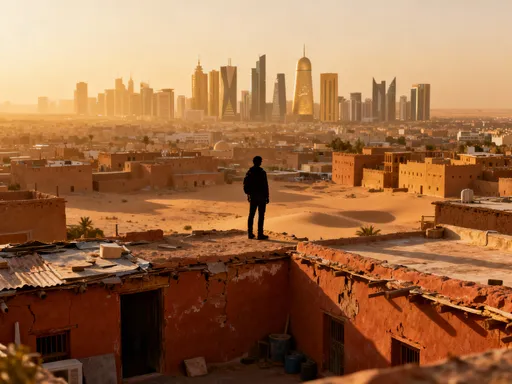
For those seeking elevation without leaving the city center, Al-Kindi Plaza in the historic ad-Dirah district offers a rare urban retreat. Tucked behind the bustling Suq al-Zal, this accessible rooftop provides a 360-degree panorama of old and new Riyadh. From this vantage, the contrast is striking: centuries-old mud-brick buildings with ornate wooden balconies stand shoulder to shoulder with sleek glass towers that pierce the skyline. The view captures the city’s layered identity in a single frame, making it one of the most photogenic and emotionally resonant spots in the capital.
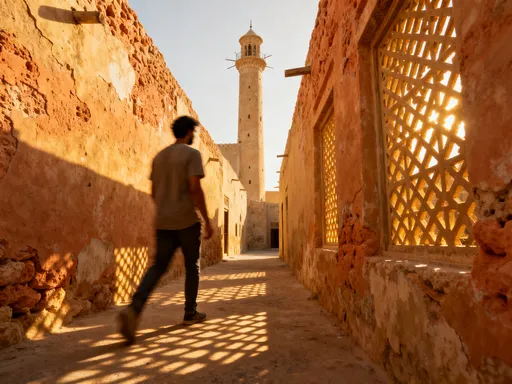
Access is simple but discreet — enter through a small café on the ground floor that doubles as a cultural lounge. The owner, a longtime resident passionate about heritage, often welcomes visitors and shares stories about the neighborhood’s history. Climbing the narrow staircase to the rooftop feels like stepping into a secret world. At golden hour, the low sun bathes the old city in warm amber light, casting long shadows and highlighting the texture of traditional Najdi architecture. The call to prayer echoes from nearby minarets, blending with the distant hum of traffic — a soundscape that speaks to the city’s rhythm.
Safety is well maintained, with secure railings and regular maintenance. The rooftop is open daily until sunset, and evening visits are particularly rewarding as the city’s lights begin to flicker on. While the space is compact, it accommodates small groups comfortably. Visitors are encouraged to be respectful — this is not a commercial observation deck, but a community space that values quiet appreciation. For families, it’s a chance to teach children about heritage; for travelers, it’s a moment of connection with the soul of Riyadh.
Kingdom Centre Skybridge: More Than Just a Tourist Spot
The Kingdom Centre’s skybridge on the 45th floor is one of Riyadh’s most famous viewpoints — and for good reason. Spanning 65 meters above the city, this glass-floored walkway offers a heart-pounding perspective of the capital below. Yet most visitors experience it during peak hours, when crowds and reflections limit the full impact. The true magic lies in timing: a weekday morning visit or a late-night session after the mall closes reveals a different side of this landmark.
Early risers are rewarded with soft light and minimal foot traffic. From the skybridge, the city unfolds in all directions — the geometric patterns of neighborhoods, the winding paths of major roads, and the distant haze of the desert horizon. The glass floor adds a thrilling dimension, allowing a direct view of the streets far below. During cooler months, the experience feels almost serene, with clear skies enhancing visibility. In summer, the air-conditioned interior provides a comfortable refuge, though humidity can reduce clarity.
Beyond the view, the Kingdom Centre itself is a cultural statement. Designed by a global architecture firm, its sleek, curved silhouette symbolizes modern Saudi ambition. The mall beneath it houses luxury brands, art installations, and dining options that reflect the city’s cosmopolitan shift. But the skybridge remains the heart of the experience — a place where visitors pause, look out, and momentarily grasp the scale of Riyadh’s transformation. For those willing to plan their visit strategically, this well-known spot can still deliver a sense of discovery.
Najd Village Highlands: A Cultural Vista with Soul
Near the heritage district of Bani Malik, the elevated grounds of Najd Village offer one of the most culturally rich viewpoints in Riyadh. This reconstructed traditional village, built to preserve Najdi architectural heritage, sits on higher terrain, providing panoramic views of the surrounding area. From this vantage, the cityscape blends seamlessly with the desert, and the low-rise, earth-toned buildings echo the colors of the land. At sunset, the effect is breathtaking — the sky turns deep orange and purple, casting a golden glow over the mud walls and wooden beams.
Walking through the village, visitors encounter recreated homes, courtyards, and watchtowers that reflect centuries-old design principles. The architecture is not just aesthetic; it’s functional, with thick walls that insulate against heat and wind. From the highest point in the complex, the view extends toward the Tuwaiq Escarpment, creating a visual dialogue between human settlement and natural formation. Families often gather here in the late afternoon, children playing in the courtyards while elders sit in shaded areas, continuing traditions in a modern context.
Visitors are encouraged to observe local customs: dress modestly, speak quietly, and avoid intrusive photography. The site is open to the public, but respect for cultural norms enhances the experience. Nearby, small heritage exhibits and craft shops offer deeper insight into Najdi life. For those seeking more than just a photo, this viewpoint offers a connection to identity, history, and place — a rare combination in any city.
The Hunt for Hidden Rooftops: Local Etiquette and Urban Exploration
Not all great views in Riyadh come from official sites. A growing number of travelers and locals are discovering lesser-known rooftops — on residential buildings, parking structures, and quiet commercial blocks. This form of urban exploration is gaining popularity, but it requires sensitivity and respect. Unlike cities with public rooftop culture, Riyadh values privacy and discretion, so access must be sought thoughtfully.
The key to ethical rooftop spotting is engagement, not intrusion. If a building has a visible upper level with potential views, the best approach is to inquire politely at a ground-floor business or with a security officer. Many owners are open to respectful visitors, especially if they explain their interest in photography or appreciation of the city. Offering a small gesture, such as buying a drink from a nearby café, can go a long way. The goal is not to claim a space, but to share it temporarily and leave it unchanged.
Cultural norms around privacy mean that some areas will always remain off-limits, and that’s as it should be. The reward is not in conquering every height, but in discovering the ones offered with trust. When access is denied, alternatives exist — public parks on elevated ground, university campuses with open courtyards, or even quiet hillside roads on the city’s outskirts. The spirit of exploration thrives not on trespassing, but on curiosity guided by respect.
Conclusion: Elevate Your Journey, Not Just Your Camera
Seeking out Riyadh’s hidden viewpoints is about more than capturing the perfect photo. It’s about slowing down, looking deeper, and allowing the city to reveal itself in layers. From the restored banks of Wadi Hanifah to the quiet rooftops of the old souq, these elevated spaces offer moments of clarity in a world that often feels too fast. They remind us that perspective is not just physical — it’s emotional, cultural, and personal.
Each of these lookouts tells a different story: of environmental renewal, architectural harmony, cultural pride, and quiet resilience. Together, they form a mosaic of meaning that goes beyond sightseeing. For the thoughtful traveler, especially women managing family life and personal reflection, these moments of elevation become acts of renewal. They offer space to breathe, to think, and to reconnect with the joy of discovery.
So the next time you’re in Riyadh, don’t just walk through the city — rise above it. Find a quiet hill, a hidden balcony, or a rooftop at golden hour. Let the view settle over you. In that stillness, you may not just see the city differently — you may see yourself differently too. The real journey isn’t measured in miles, but in moments that lift the spirit. And in Riyadh, those moments are waiting — just above the noise, just beyond the map.