How Yoga and TCM Quiet the Mind – My Beginner’s Breakthrough
Ever feel like your thoughts won’t slow down, no matter what you try? I was stuck in that loop—overthinking, restless, drained—until I combined simple yoga meditation with traditional Chinese medicine (TCM) wisdom. As a total beginner, I was skeptical, but these natural psychological adjustment methods brought real calm. No magic, just consistency. If your mind feels noisy, this gentle, proven path might be exactly what you’ve been missing.
The Mental Clutter Epidemic: Why Modern Life Overloads the Mind
In today’s world, mental clutter has become a silent epidemic. Many women between 30 and 55 report feeling mentally overwhelmed, caught in a cycle of endless to-do lists, family responsibilities, and digital distractions. The brain, once designed to focus on survival and presence, now processes constant notifications, social comparisons, and work demands. This relentless input doesn’t just tire the mind—it disrupts the nervous system. The sympathetic nervous system, responsible for the body’s “fight or flight” response, becomes overactive. As a result, even minor stressors can trigger disproportionate emotional reactions. Fatigue, irritability, and difficulty concentrating are not signs of personal failure, but symptoms of a system pushed beyond its natural rhythm.
What many don’t realize is that psychological imbalance isn’t always rooted in trauma or clinical anxiety. Often, it’s the cumulative effect of living out of sync with the body’s need for rest, rhythm, and regulation. Traditional healing systems like TCM have long understood that emotional turbulence is not something to suppress, but a signal of deeper disharmony. In this view, mental noise isn’t a flaw—it’s feedback. The goal isn’t to eliminate thoughts, but to restore the internal environment so the mind can settle naturally. This shift in perspective—from fixing to balancing—is the foundation of sustainable emotional wellness.
Modern psychology often treats the mind as separate from the body, but integrative approaches challenge this divide. When the body is tense, digestion is sluggish, or sleep is disrupted, the mind reflects that imbalance. Chronic stress, for example, doesn’t just affect mood—it alters hormone levels, weakens immunity, and depletes vital energy. The solution, then, isn’t more willpower or busyness, but a return to practices that honor the body’s innate wisdom. Yoga and TCM offer exactly that: time-tested methods to quiet the nervous system, regulate emotions, and create space for clarity.
Rooted in Balance: TCM’s View of Emotional Health
Traditional Chinese Medicine sees emotional health not as a psychological state, but as a reflection of internal harmony. In TCM, each major organ is linked to a specific emotion and type of energy, known as Qi. For example, the liver governs the smooth flow of Qi throughout the body, and when this flow is blocked—a condition called Qi stagnation—it often manifests as irritability, frustration, or mood swings. This is especially common in women whose lives involve constant multitasking and emotional labor. The heart, meanwhile, houses the Shen, often translated as the “spirit” or “mind.” A calm Shen means mental clarity, emotional stability, and restful sleep. When the Shen is disturbed, the mind becomes restless, scattered, or anxious.
Unlike Western models that often treat emotions as problems to manage, TCM views them as natural energies that must be allowed to move and transform. Grief, anger, joy, and worry are not inherently harmful—only when they become excessive or stuck do they cause imbalance. The key is not suppression, but circulation. Just as blood nourishes the body, Qi nourishes the mind. When Qi and blood are strong and flowing freely, emotions come and go like weather patterns, without leaving lasting damage. But when the body is depleted—due to poor diet, lack of sleep, or chronic stress—the emotions linger, creating a cycle of mental fatigue and emotional reactivity.
TCM’s approach to psychological adjustment is deeply nourishing. Instead of focusing on symptom reduction, it emphasizes building resilience from within. Herbs like ginseng and astragalus are used to strengthen Qi, while sour jujube seed and lotus plumule help anchor the Shen and support restful sleep. Acupuncture and acupressure target specific points to release stagnation and calm the nervous system. These methods don’t work overnight, but over time, they create a stable internal foundation. When the body is no longer running on empty, the mind naturally becomes quieter, more present, and more resilient.
Yoga Meditation for Beginners: More Than Just Stretching
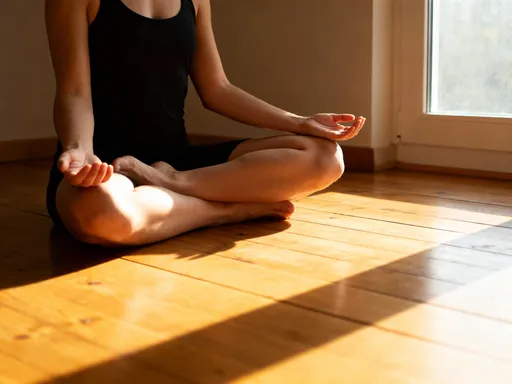
For many, the word “yoga” brings to mind complex poses and flexible bodies, but at its core, yoga is a practice of awareness. Yoga meditation, in particular, is not about physical performance, but about cultivating presence through breath and gentle movement. For beginners—especially those new to mindfulness—it offers a tangible entry point. Unlike sitting meditation, which can feel daunting when the mind is racing, yoga meditation engages the body, making it easier to focus. Simple practices like mindful breathing, slow stretches, and seated postures create a bridge between physical sensation and mental stillness.
The science behind this is clear: slow, rhythmic breathing activates the parasympathetic nervous system, the body’s “rest and digest” mode. This directly counteracts the stress response, lowering heart rate, reducing cortisol levels, and calming the mind. Even five minutes of diaphragmatic breathing—drawing air deep into the belly—can shift the nervous system from alertness to relaxation. When combined with gentle movement, such as a slow cat-cow sequence or a seated forward bend, the body begins to release stored tension. This is especially helpful for women who carry stress in the shoulders, neck, and lower back.
Starting a yoga meditation practice doesn’t require a mat, a studio, or special clothing. A quiet corner of the living room, a few minutes in the morning or before bed, and a willingness to be present are enough. Beginners can begin with just three to five minutes a day, focusing on the sensation of breath moving in and out. Over time, this practice builds the mental muscle of attention, making it easier to notice when the mind has wandered into worry or rumination—and gently return to the present. The goal is not to stop thoughts, but to change the relationship with them.
Merging Two Worlds: How TCM Principles Enhance Meditation Practice
While yoga meditation calms the nervous system, TCM provides a framework for deepening that calm on an energetic level. One powerful way to merge these traditions is through timing. In TCM, the body follows a 24-hour Qi clock, with different organs most active at specific times. The hours between 5 a.m. and 7 a.m., for example, are governed by the large intestine, a time associated with elimination—both physical and mental. Practicing yoga meditation during this window supports the body’s natural rhythm of release. Similarly, the heart is most active between 11 a.m. and 1 p.m., making midday a good time for a short breathing practice to refresh the Shen.
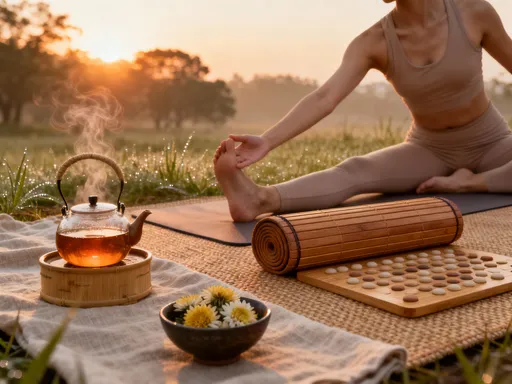
Another way to integrate TCM is through simple sensory supports. Sipping a warm cup of chrysanthemum or rose tea before meditation can help soothe liver Qi and calm the mind. Applying gentle pressure to acupressure points—such as Yintang, the “third eye” point between the eyebrows—can quiet mental chatter and promote a sense of inner stillness. These small acts are not mystical, but grounded in physiological responses. Warmth relaxes muscles, scent influences mood, and touch signals safety to the nervous system.
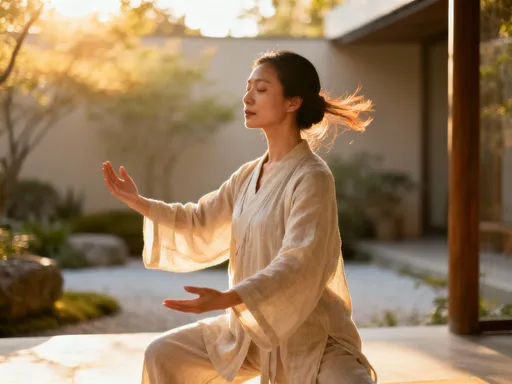
The synergy between yoga and TCM lies in their complementary focus: yoga works with the body to influence the mind, while TCM works with the body’s energy to support mental clarity. When practiced together, they create a more complete experience of balance. A yoga session that ends with a few minutes of stillness, supported by a warm herbal tea and a quiet environment, becomes more than exercise—it becomes a ritual of restoration. This is not about achieving perfection, but about creating moments of return, where the body and mind can reconnect.
Practical Psychological Tools: Daily Routines That Work
One of the most effective ways to integrate yoga and TCM into daily life is through a simple, repeatable routine. A beginner-friendly practice might include 10 minutes of breath-focused yoga in the morning, followed by a 5-minute rest with eyes closed and a warm cup of lotus seed or lily bulb tea. This combination supports both physical relaxation and Shen nourishment. The yoga session can be as basic as sitting comfortably, placing hands on the belly, and breathing slowly for five cycles, then adding gentle neck rolls and shoulder releases. The key is consistency, not complexity.
Mindful walking is another accessible tool. Instead of rushing from one task to the next, a woman can take a short walk—around the block, through the backyard, or even from room to room—while paying attention to each step and breath. This practice grounds the body and interrupts the cycle of mental overactivity. Similarly, diaphragmatic breathing can be practiced anywhere: while waiting for the kettle to boil, during a child’s homework session, or before answering an email. These micro-moments of presence accumulate over time, creating a buffer against stress.
Herbal support can also be part of the routine. Chrysanthemum tea, known for its cooling properties, helps clear heat from the liver, which in TCM is linked to irritability and red eyes. Lotus seed, often used in soups and teas, is said to nourish the heart and calm the Shen. These are not quick fixes, but gentle tonics that support long-term balance. When combined with mindful movement and breath, they form a holistic approach to psychological adjustment—one that respects the body’s natural rhythms and the mind’s need for quiet.
Real Shifts, Not Quick Fixes: Tracking Subtle Emotional Changes
Many women expect dramatic changes when starting a new wellness practice, but the benefits of yoga and TCM often appear in subtle, gradual ways. The first sign might be a slightly better night’s sleep—falling asleep more easily or waking less often. Another might be a moment of pause before reacting to a stressful comment, instead of snapping in response. These small shifts are not trivial; they are evidence of a calmer nervous system and a more regulated emotional life.
It’s important to recognize that progress is not linear. Some days will feel clearer than others, and that’s normal. The practice isn’t about achieving constant peace, but about increasing the capacity to return to balance after disruption. Over time, the mind becomes less reactive, the body less tense, and the heart more at ease. This is not because life has changed, but because the inner response to life has shifted.
Tracking these changes doesn’t require a journal or app—simply noticing is enough. Did you feel a moment of calm while washing dishes? Did you breathe deeply before responding to a request? These are victories. Psychological adjustment is not about becoming someone else, but about coming home to oneself. It’s a form of self-respect, a quiet promise to honor one’s own well-being in a world that often demands endless giving.
Sustaining Calm: Building a Lifestyle That Supports Mental Balance
Lasting mental balance isn’t created in a single session, but through daily habits that honor the body and mind. A morning ritual might include lighting a candle, sipping warm water with lemon, and practicing a few slow breaths before the day begins. An evening wind-down could involve turning off screens an hour before bed, doing a gentle stretch, and drinking a calming herbal tea. These small acts signal to the nervous system that it’s safe to rest.
Creating a quiet space in the home—no matter how small—can also support practice. A chair in the corner with a soft blanket, a few meaningful objects, and a timer for meditation becomes a sanctuary. This space doesn’t have to be elaborate; it just needs to be consistent. When the environment supports stillness, the mind follows more easily.
Equally important is learning to listen to natural rhythms. The body thrives on routine: regular meals, consistent sleep times, and moments of pause throughout the day. In TCM, this is called living in harmony with the seasons and the internal clock. When life aligns with these rhythms, energy flows more smoothly, emotions stabilize, and mental clarity improves. This isn’t about rigid rules, but about gentle attunement—returning again and again to breath, body, and balance.
True psychological wellness isn’t about silencing the mind completely, but learning to move with its rhythms. By blending the ancient wisdom of TCM with the accessible practice of yoga meditation, beginners can find a gentle, sustainable path to emotional balance. This isn’t a cure-all, but a proven way to reclaim calm—one breath, one moment, one day at a time.